
Coconino County Court Record Requests
First, figure out which office holds the file. The Coconino County Clerk of the Superior Court keeps felony, general civil, domestic-relations, probate, and juvenile files. That covers the Superior Court in Coconino County. Justice Courts keep limited civil, small-claims, eviction, misdemeanor, and traffic records. Municipal Courts hold city ordinance, misdemeanor, and traffic cases. Sharing a building does not merge the files.
Use more than one route if the first comes up short. Arizona Public Access is free. It offers case information and limited minute entries. eAccess sells eligible Superior Court civil and criminal documents. For the complete file, visit the Flagstaff clerk's counter or call ahead. You can also mail the Clerk of Superior Court at 200 N. San Francisco St., Flagstaff, AZ 86001. The Coconino Law Library helps with forms but does not hold court records. Before mailing funds, confirm page count, certification, research, postage, accepted payment, and current turnaround.
- Find the court and case number through the public index or a filed court paper.
- Identify the exact document title and filing date from the case history.
- Check eAccess when the matter fits its Superior Court date and case-type coverage.
- Contact the owning clerk by phone, mail, or counter for missing or complete material.
- State whether inspection, a plain copy, certification, exemplification, or authentication is required.
Coconino County's Three Record Layers
Coconino County court records sit in three layers. The free case index comes first. Public Access updates weekly and is not the official record. eAccess sits on top of it, selling previews and downloads for open Superior civil and criminal cases filed on or after July 1, 2010. The clerk's file is the third layer, and it covers everything older, non-imaged, or counter-only.
| Layer | Best for | Does not guarantee |
|---|---|---|
| Public Access | Finding the case and reading public events | A complete file or certified proof |
| eAccess | Buying eligible filed document images | Every event image or every case type |
| Local clerk file | Inspection, copies, certification, and older material | Access to sealed or confidential content |
A docket entry only says an order was filed. The signed order itself holds the full terms. Previews also carry an unofficial watermark, so pick a filed image or a clerk-certified copy when the recipient needs proof.
Kinds of Court Records
Coconino County court case records can include many items. Pleadings, motions, responses, minute entries, signed orders, judgments, notices, and public hearing entries all qualify. Criminal files may hold charging instruments, plea documents, sentencing orders, and public probation events. Civil files may hold complaints, service papers, motions, arbitration entries, judgments, and post-judgment filings. Court rules and each document's status still govern access.
One record cannot stand in for another. A transcript comes only through an authorized reporter or recording channel. It is never rebuilt from a minute entry. The clerk stores exhibits but publishes no local exhibit-request procedure. A case history is a dated index; a filing is the actual document. A calendar just lists settings and is expressly nonofficial.
Coconino County Copy Request Details
Coconino County publishes no standalone copy-request form. A written request just needs enough detail. The clerk must be able to locate and price the record. List the court and full case number first. Then add the case caption, document name, filing date, copy type, number of copies, delivery address, and contact details. Treat that as a practical checklist, not mandatory form fields.
The clerk contact form is an inquiry channel rather than a certified-copy order form. It asks for requester contact details, a concern category, and an explanation. For a document inquiry, ask the clerk for a quote. Request pages, certification, research, postage, payment method, and current processing time. Restricted records may also require proof of authority or a court order.
Before sending payment: Confirm the total with the proper clerk because the published pages do not settle every payee, delivery, identification, or turnaround detail.
Court Records: What They Contain
An eAccess case detail shows five blocks. Each block carries official information. Read together, they point you toward the right Coconino County court record to request. A blank disposition can mean a charge is still pending. "Document Not Available Online" means the event is indexed but has no remote image. A hearing result can also stay blank. The court may not have entered one yet.
| Case Information | Case number, filing date, title, category, status, location, and assigned judicial officer. |
|---|---|
| Party Information | Unrestricted participant name, role, and attorney information. |
| Charge Information | Statute, description, classification, and disposition in criminal matters. |
| Event Information | Event label plus Preview, Add to Cart, or a document-unavailable message. |
| Hearing Information | Courtroom, hearing date, type, and entered result. |
Protected party data, sealed images, and sensitive identifiers are left out. So a court file can be public in part while one image stays restricted or available only through the clerk.
Coconino County eAccess Purchases
eAccess charges $10 for an available document under its administrative order. The event row offers Preview Document or Add to Cart. Checkout produces a receipt plus a View or Download control. Download within 24 hours, because later access requires another purchase. First-page previews carry an unofficial watermark.
Electronic certification costs $39 per document and stays verifiable for 180 days. That certificate works for many uses. Some recipients still insist on a local raised seal. Ask first. Then choose between e-certification and the Coconino County Clerk's certified, exemplified, or authenticated copy route. Subscription plans suit high-volume users. A one-time requester should confirm the live price screen before checkout.
Note: A purchase proves access to that image. It does not prove every public or restricted item in the Coconino County file was included.
Copy Fees and Certification
Coconino County Superior Court posts a fee schedule with separate prices for pages, certification, research, seals, and mail. Those numbers cover the Superior Court route only. Justice Courts set their own rates: $33 for a record search, $33 for certification, and $33 for a CD copy of a hearing. Check the current schedule before you send any money.
| Superior Court service | Posted fee | Use |
|---|---|---|
| Copy or photographic copy | $0.50 per page | Plain local copy |
| Certification as correct | $35 | Clerk-certified copy |
| Exemplification | $70 | Two-seal authentication |
| Authentication | $105 | Three-seal authentication |
| Document research | $35 per year or source | Locating a record |
| Postage and handling | $8 | Mailed delivery where applicable |
A party-furnished document comparison also costs $0.50 per page. The fee to seal or reopen a file is just an administrative charge. Paying it does not mean the sealing request will be granted.
Coconino County Raised-Seal Copies
Start a raised-seal request with the exact case and document, never a broad topic. Call the Coconino County Clerk of the Superior Court at (928) 679-7600. You can also ask at the courthouse counter. Find out whether the file is available. Ask how many pages it holds, which seal type the recipient needs, and how to submit payment.
Certification simply attests that the copy is correct. Exemplification and authentication stack on more seals at higher posted rates. A payment history record and certification of an unspecified matter are two items. Each carries a listed $35 fee. These differ from the $39 electronic certificate, which comes with its own online validation period.
Access Rules for Court Records
Arizona Supreme Court Rule 123 presumes the public can see judicial records, but it also lists confidential categories, sets request conditions, and explains how custodian decisions get reviewed. A.R.S. section 39-121 states Arizona's general public-record inspection principle, though judicial access runs mainly through Rule 123. A.R.S. section 12-284.01 is the statute behind electronic court access and its fees.
Restricted files: Sealed cases, juvenile matters, protection orders, mental-health records, victim or witness data, probate items excluded online, and sensitive identifiers require rules beyond an ordinary web search.
Try the clerk's routine access channel first. When a judicial record is not routinely posted, send a specific Rule 123 request to the custodian. Someone entitled to a restricted record should include the case number and proof of authority. Keep one more thing in mind. An online gap can reflect venue, age, lag, or missing imagery. It is not always a legal seal.
Coconino County Clerk of the Superior Court
200 N. San Francisco St.
Flagstaff, AZ 86001
(928) 679-7600
Monday through Friday, 8:00 a.m. to 5:00 p.m., except holidays.
Coconino County Older File Fallbacks
A Coconino County court record may predate eAccess coverage. It may show no document button, or fall into an excluded online category. Go to the clerk in those cases. Probate is left out of free Public Access. Family, juvenile, sealed, restricted, exhibit, and non-imaged material all take a custodian-specific inquiry. The Coconino County Clerk keeps the full Superior Court file even when neither statewide service shows it.
The county's judicial technology plan reports ongoing backscanning and four Superior Court public-access PCs. Treat that as planning and inventory. It is not a promise that every old record is scanned or that a terminal will be free when you arrive. Call ahead.
Coconino County or Federal Records
State and federal court files live in separate systems. A Coconino County felony, civil, family, or probate file stays with Arizona courts. A federal matter arising in Coconino County belongs to the U.S. District Court for the District of Arizona. It is reachable through PACER and CM/ECF. Bankruptcy runs through its own federal court on PACER too. The two case-number systems do not interchange. The PACER source presents the official public system for federal dockets and filed documents.
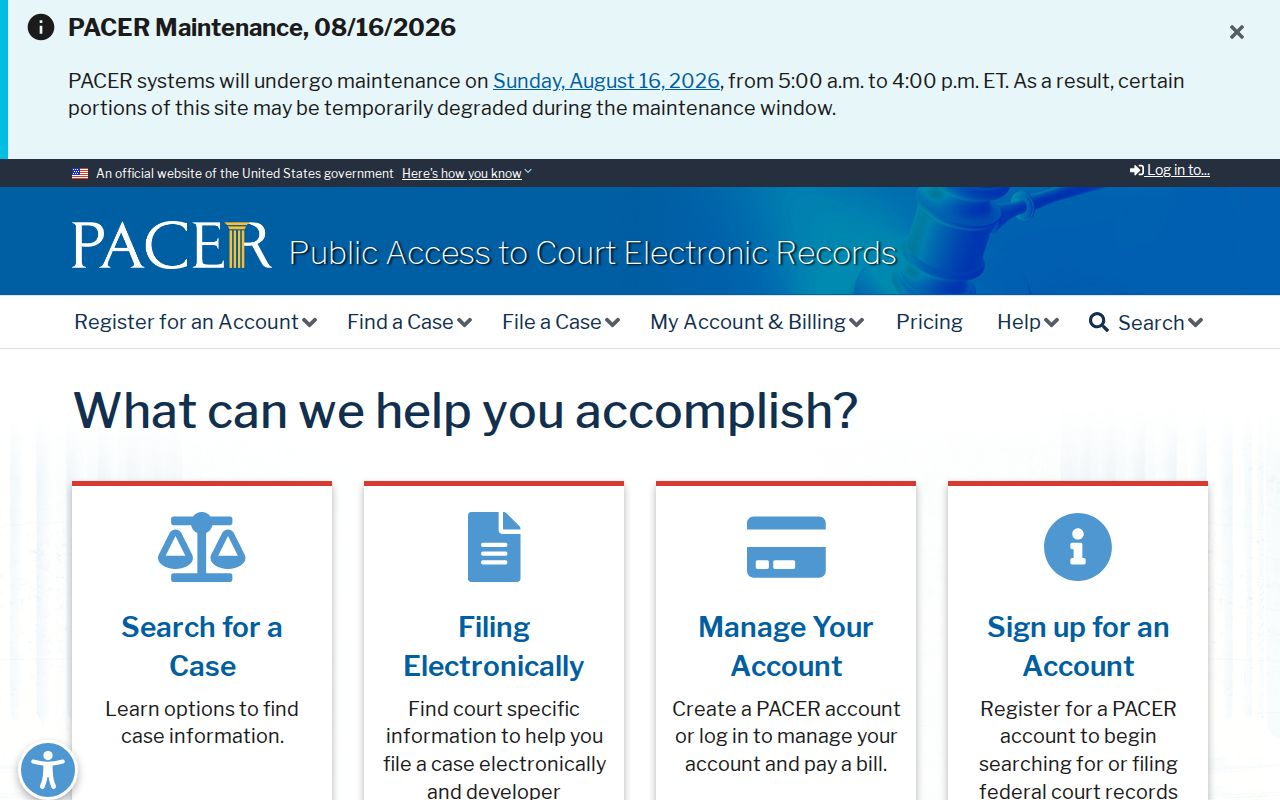
Registering for PACER costs nothing. Access generally runs $0.10 per page, with a $3 cap on many case-specific docket reports or documents, and fees are waived each quarter when charges total $30 or less. The U.S. Bankruptcy Court for the District of Arizona source identifies the separate federal bankruptcy record system.
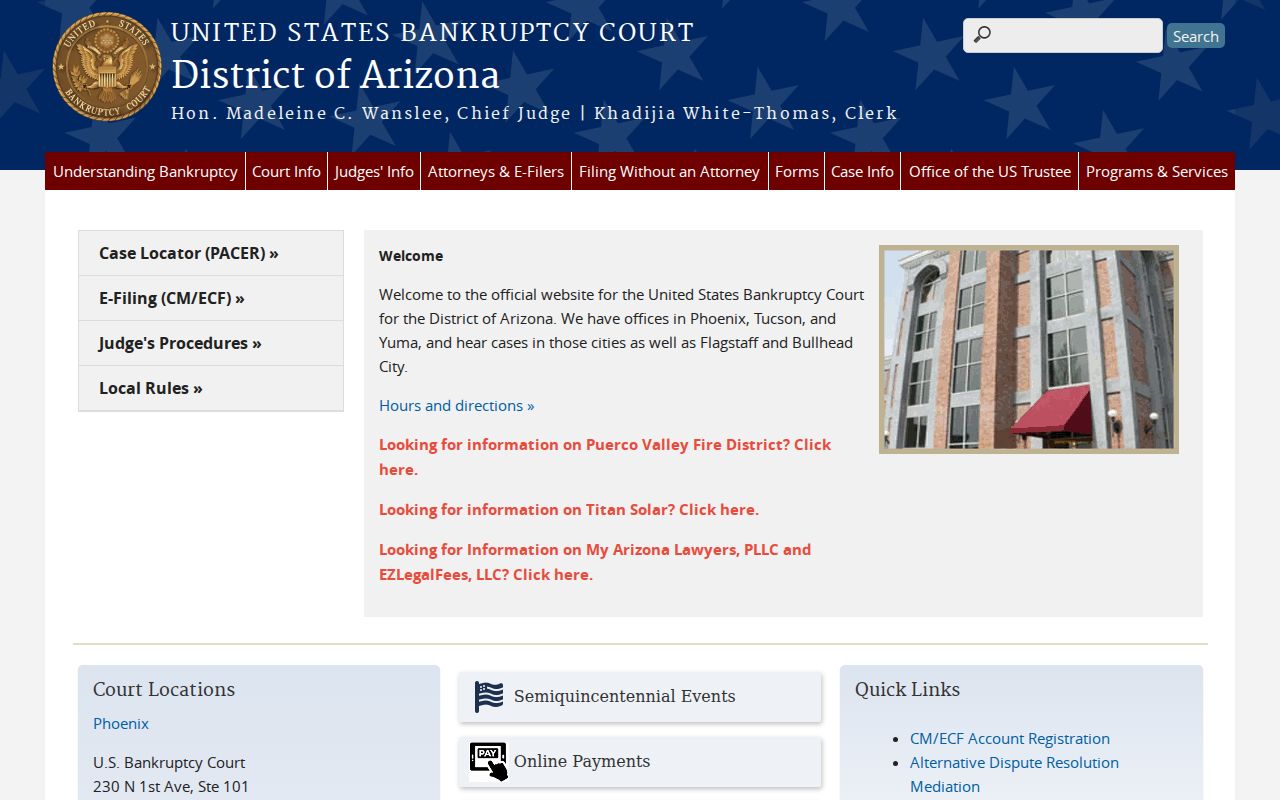
Flagstaff serves as a hearing location for bankruptcy matters. The filings themselves go through the federal bankruptcy system, not the Coconino County clerk.
Coconino County Federal Appeal Records
Federal appeals from the District of Arizona go to the Ninth Circuit, not the Arizona Court of Appeals. The Ninth Circuit source identifies that federal appellate court and its public services.
A federal appellate docket is its own file. Search it by its own case number, because the trial-court docket will not hold the full appeal record.
Arizona state appeals follow a different route. A Justice or Municipal appeal lands in Superior Court. An appeal from Coconino County Superior Court ordinarily goes to the Arizona Court of Appeals, Division One, with possible review by the Arizona Supreme Court.
Coconino County Federal RECAP Copies
CourtListener's RECAP source provides a free archive of contributed federal dockets and documents.
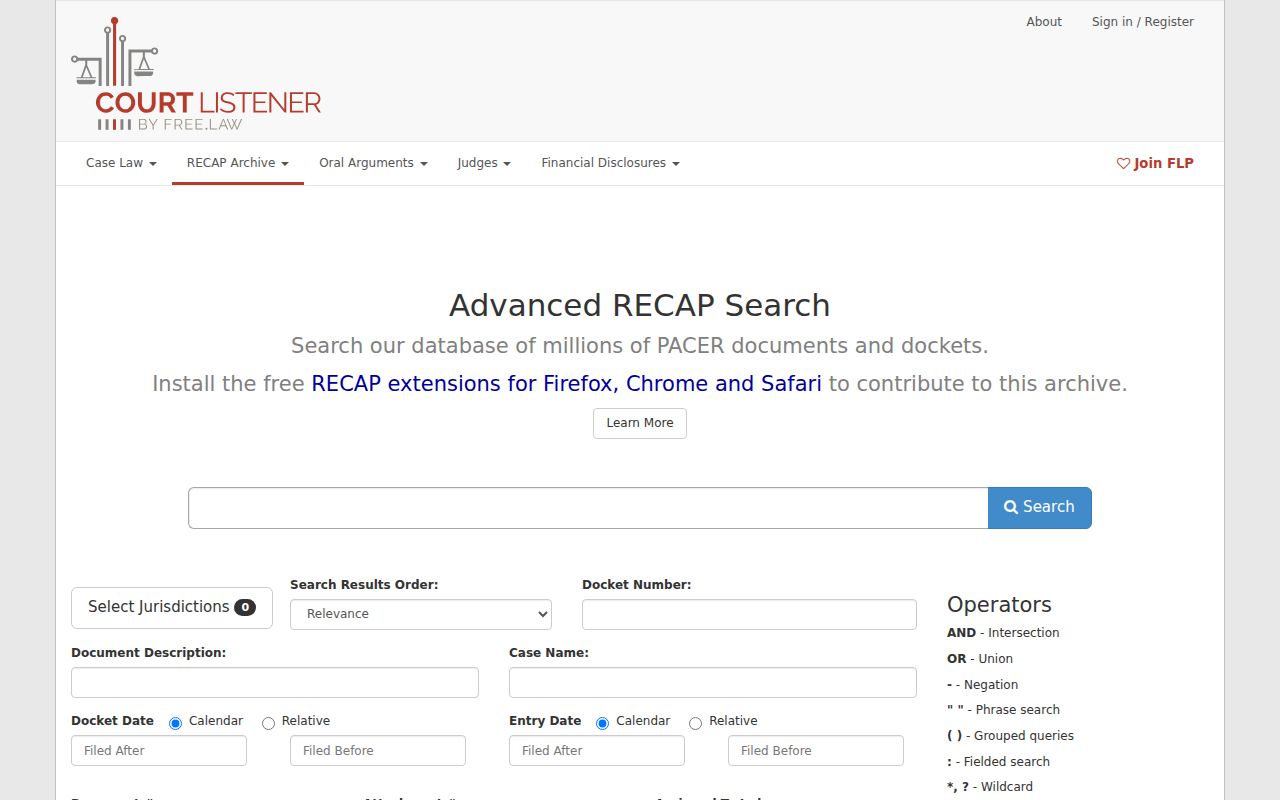
RECAP can cut the cost of a federal document another user already contributed. But the collection is incomplete. When RECAP lacks a federal docket item, PACER is still the official route. This federal archive has no role in a Coconino County Superior, Justice, or Municipal Court request. For those Arizona files, use Coconino County docket search to find the case. Then request the document from the proper state or local custodian.